

How To Claim Business Expenses To Save Tax
Unlimited Rewards
Earn up to 5x points on every $1 spent with your card.

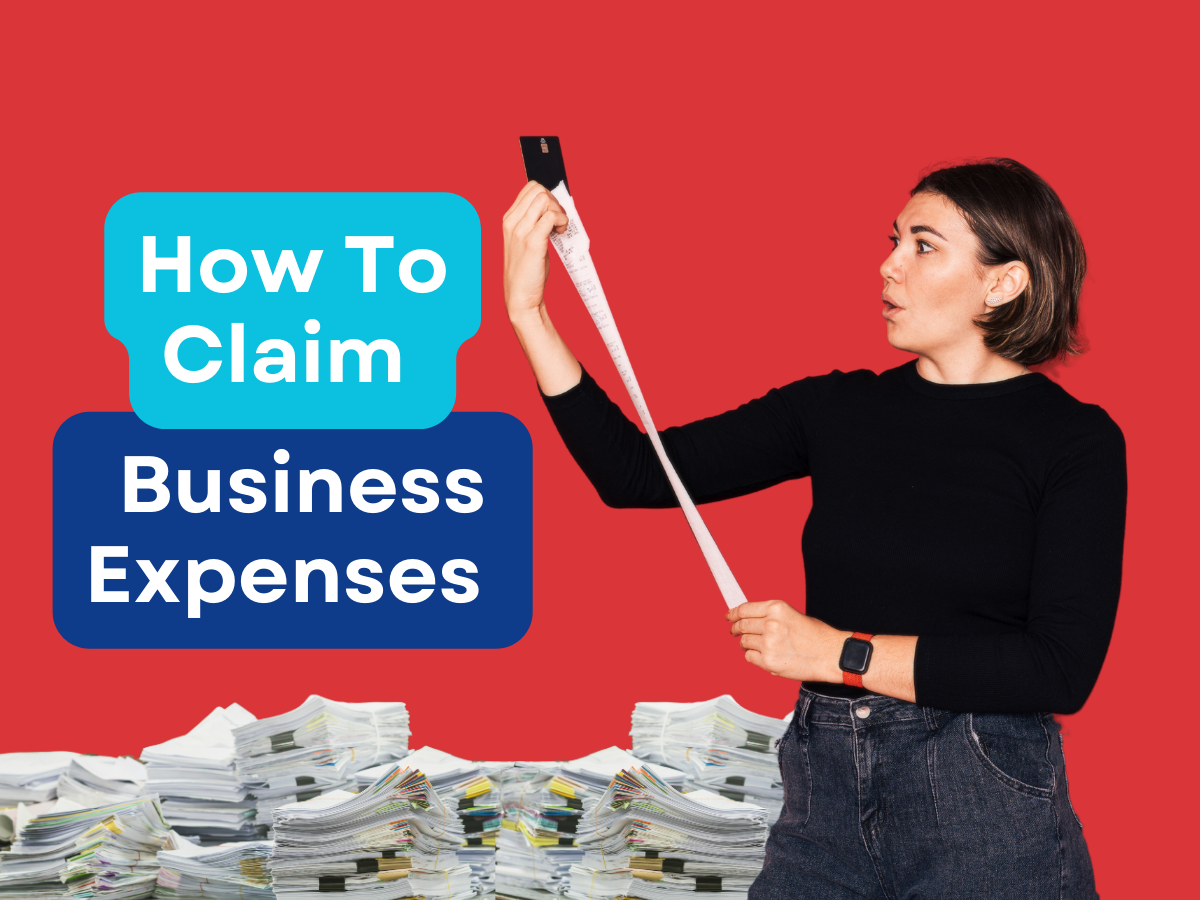
Our Guide on How to Claim Business Expenses when You're Self-Employed
Many individuals new to self-employment and managing their own tax affairs may not be fully aware of the concept of allowable expenses. There is indeed a method to claim business expenses, which could significantly reduce your total tax bill. Understanding this process is critical for self-employed persons aiming to maximise their tax savings.
We have put together a detailed guide on claiming business expenses. Keep reading to uncover vital insights that you can apply to your forthcoming tax returns.
What Is a Business Expense?
According to HM Revenue and Customs (HMRC), business expenses encompass all operational costs incurred in the running of your business. Tracking these expenses is crucial not only for understanding your profit margins but also for tax purposes.
When we refer to 'claiming' expenses, some may assume it means receiving a payout. In reality, to claim expenses is to claim tax relief. These business expenses are deducted from your gross income, thereby reducing your taxable income.
For instance, if you charge a client £100 for a service and incur £10 in expenses to provide it, that £10 is your business expense. This leaves you with a profit of £90. You're
taxed on the £90, not the full £100. For those in the
Basic Tax Rate bracket , this could mean a saving of £2.
For example:
- £100 income x 20% Basic Rate Tax = Tax Due of £20
- £100 income less £10 of expenses claimed = £90 Profit x 20% Basic Rate Tax = Tax Due of £18
- Therefore, claiming £10 of expenses generates a saving of £2
Though modest at first glance, such savings accumulate significantly over time.
What Business Expenses Can Be Included as Deductibles
Not all business expenses can be claimed for tax purposes, unfortunately. Navigating the allowable expenses can be quite complex. HMRC provides a resource for calculating taxable profits for Self Assessment, which includes a detailed table of typical business expenses.
Some of the allowable expenses are:
- Business Premises: This category covers the costs directly related to your business location, such as rent, utility bills, and property insurance.
- Office Costs: Essential office expenses, including stationery, printing, IT support, and communication bills like internet and phone services, can be deducted.
- Legal and Financial Expenses: Professional fees for services such as accounting, insurance premiums, and legal advice are considered allowable expenses.
- Travel Costs: If you travel for business purposes, you can claim the cost of fuel, train tickets, airfare, and hotel accommodation.
- Items Bought to Sell: The purchase of goods for resale, including inventory, stock, merchandise, and raw materials, is deductible from your revenue to calculate taxable profit.
Some expenses may be partially deductible when used for both personal and business purposes, such as a
home office or mobile phone. In these cases, you can only claim the portion of the expense that relates to your business operations.
Capital Allowances
Additionally, it's important to understand capital allowances, which allow you to deduct the cost of certain business assets from your profits over time. These assets typically have a longer life, such as equipment, machinery, or business vehicles.
Professional Advice
Navigating through the maze of what is and isn't allowable can be challenging. For areas that tread the line between personal and business use, or for more complex deductions like capital allowances, seeking professional advice from a
Chartered Accountant can ensure you are making the correct claims on your tax return.
What Business Expenses Cannot Be Included as Deductibles
As highlighted earlier, it’s vital to discern which expenses are strictly business-related to qualify as deductibles for tax purposes.
Here are some common expenditures that are not eligible for tax relief:
- Non-Business Related Travel: Commuting from your home to a permanent workplace is not considered a deductible expense.
- Premises Acquisition Costs : Capital expenses, like the initial purchase of a business property, cannot be deducted as they are not ongoing operating costs.
- Client Entertainment: While fostering client relationships is key, the costs of entertaining clients, such as meals or event hospitality, cannot be claimed.
- Personal Expenses: Costs for items that are not exclusively used for business purposes are not allowable as deductions.
- Non-Specialist Clothing: General clothing that is not specific to your work, unlike protective or branded uniforms, is not deductible.
- Training Courses: Professional development is important, but when you're self-employed you can only claim expenses for training that directly relates to your current business activities.
It’s crucial to correctly identify and separate non-allowable expenses, such as personal or capital expenditures, from those that are allowable to ensure accurate tax filings and to avoid issues with tax relief claims.
Calculating Allowable Expenses
With an understanding of which expenses are tax-deductible, you can now determine how much you could potentially reduce your taxable income. Accurate and up-to-date bookkeeping is essential for this task, as it should provide a comprehensive record of your business expenses.
Should there be any uncertainty regarding the eligibility of an expense, consulting with a Chartered Accountant is advisable. They are skilled in identifying which expenses are permissible deductions.
The Process of Claiming Business Expenses
Armed with a comprehensive and accurate list of business expenses, supported by your financial records, you may begin to claim these on your tax return. Carefully input the allowable amounts into the appropriate fields of your tax return form prior to submission and payment.
It is worth noting that whilst HMRC does not typically request immediate evidence for the expenses claimed, this does not provide a licence to submit inaccurate figures. HMRC reserves the right to audit your claims and can request substantiation.
Should any discrepancies be uncovered, you may find your claims disallowed and could potentially face legal ramifications.
Utilising Digital Tools for Expense Management
The digital era has transformed how we handle expense tracking, with innovative tools such as Dext , and in-built features in accounting software like Xero and QuickBooks that simplify the process.
Here’s how you can use these tools to streamline your expense management:
Instant Receipt Capture
No more filing cabinets filled with paper receipts. With the receipt snapping tools available in Xero and QuickBooks, simply photograph your receipt and the details will be digitally recorded. Dext offers a similar feature, allowing for immediate data capture and categorisation.
Cloud-Based Storage
These platforms store your receipt information securely in the cloud. You gain the flexibility to access your expense records from any location, safe in the knowledge that your data is protected from physical damage or loss.
Seamless Accounting Integration
Both Xero and QuickBooks offer seamless integration with receipt snapping tools, ensuring that your financial records are automatically updated, minimising the need for manual data entry and the associated risk of errors.
Maximising Tax Deductions
By accurately recording every expense as it occurs, these digital solutions help you claim the maximum amount of tax deductions available to you, potentially lowering your taxable income.
Audit-Ready Records
In the rare case that HMRC requests proof of your expenses, having them stored and organised digitally means you can respond promptly and confidently.
Embracing these digital tools not only saves you time on routine administrative tasks but also provides peace of mind that your business finances are orderly and HMRC-compliant.
Understanding Simplified Expenses
Maintaining accurate records of all your business expenses can be demanding. Fortunately, the Simplified Expenses scheme offers a more straightforward approach.
It allows sole traders and self-employed individuals to use flat rates rather than detailed itemisation for certain expenses.
Due to its specific conditions, it's advisable to consult with your accountant to determine if Simplified Expenses is advantageous for your circumstances.
Trading Allowance vs Business Expenses
As a sole trader, you are not required to register with HMRC if your income is below £1,000 per year, thanks to the trading allowance. However, should you choose to register, this allowance can be used to lower your overall income tax.
It's important to note that you cannot combine the trading allowance with tax relief on business expenses; you must choose one. To decide which is more beneficial, compare the tax savings from both options and select the one that yields the greater financial advantage.
Final Thoughts
Understanding how to claim business expenses can lead to considerable tax savings for self-employed individuals and sole traders. This guide offers a foundational understanding of qualifying expenses and the calculation process.
For a more detailed exploration or personalised advice, contact a qualified Chartered Accountant.
ARTICLE SOURCES
🔒 Subscribe to unlock the full article
Join TaxStore for free to access the full version of this guide, plus tools, tips, and expert services to help you grow your business.
Create your free account today – it only takes a minute.
Disclaimer: This blog is for general purpose guidance, and no liability is accepted by TaxStore for action taken or not taken in reliance upon the contents of this blog. Where appropriate, professional advice should be obtained.